yeswekanban is in open alpha — free while we build.
No card, no trial timer. Sign up now and use the whole product for free. When the alpha ends, you’ll pick a plan (or cancel) — we’ll give you a week’s notice by email.
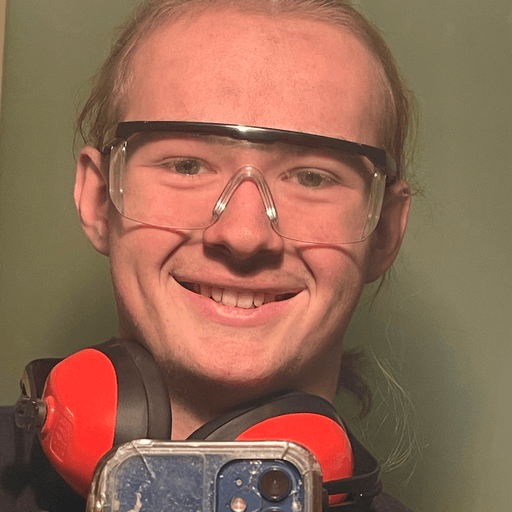
I built yeswekanban for an internship that was effectively identical to working with Kanbi's plan. At the time I was struggling hard with school and felt pretty awful about how checked out I was. When I started working on this, I was able to build all these systems in three weeks, and it felt crazy — I was able to be proud of my work for the first time in a long time. I want to share that feeling with as many people as I can.
My obsessions
Stuff I'm into right now.







What I'm building
This is my own kanban board — live. Every card is a real thing I'm building, ongoing, or already shipped. It updates on its own as I move stuff around.
Graydon Garden
founder, 17
Live from my own board · 12 projects total
Stuff you're probably wondering
Is this just homework with money attached?
Honest answer: no, but the way to know is to look at where the work comes from. Homework is something an adult assigned you. The work in yeswekanban is something you said you wanted to do — in the Kanbi interview, before the plan got made. If you said 'I want to build a wooden skateboard from scratch' and the cards are 'cut the deck, sand the edges, glue the plies, drill truck holes' — that's not homework. That's the project you picked, broken into the parts that build it. If you start it and the cards feel like homework, that's a real signal. Tell Kanbi. Adjust the plan or swap the project. Nobody's grading you.
Do I actually pick what I learn?
Yeah. The Kanbi interview asks you what you want to make. Carpentry, French pastry, a Python Discord bot, a short film, a Warhammer army you 3D-print, learning to drive, an indie game — whatever. You tell Kanbi the thing; Kanbi writes the plan around it. Your parent approves each plan before it starts — that's the one parent-approval step, and it happens every time you start a new one. The topic comes from you. If you say 'I want to learn carpentry' and your parent says 'no, that's dangerous,' that's a conversation between you and your parent, not Kanbi forcing you into something else.
Do I really get paid? Like, real money?
Real money. Stripe moves dollars from your parent's card to your bank account 48 hours after they approve each invoice. Not allowance. Not gift cards. Not points. The bank account is yours — you link it yourself. How much depends on your parent. Some families do per-task (like $5 a card), some do per-hour (like $15/hour), some do flat weekly amounts. You negotiate. It's a real job — including the negotiating-with-your-boss part.
What if I get bored, want to quit, or change projects?
You can. The plan is yours; you can change the project mid-week, swap topics, pause, or quit entirely. Kanbi can rebuild the plan around something else as many times as you want. Your parent can cancel the subscription anytime in Settings — two clicks, no email-someone-to-cancel. Honest part: a lot of kids this is built for have a pattern of starting things excited and bailing by week 3. yeswekanban is built to handle that pattern, not punish you for it. The portfolio shows what you finished, not what you bailed on. You can come back to a different project later.
Will my parent be all over me about every task?
They shouldn't be, and the product is built to keep them out. Your parent approves each new plan before it starts — that's the only approval step per plan. After that, they don't have to be in your business. They approve invoices when YOU send them (you control when). Between those, they don't have to be in your business. They CAN look at the board — it's their account too — but the design assumes they shouldn't have to. Most parents who use this don't want to be the coach; they want to be the buyer. If your parent's the type who micromanages, that's a conversation for the two of you. The product gives them the structure to NOT need to. Whether they take that is the human part.
What if I don't know what I want to do?
Normal. Kanbi's interview is built for that. It asks questions like "what's something you've been low-key curious about for a while?" or "what's a thing you started and dropped that you still kinda wonder about?" or "if you had nothing else to do for two weeks, what would you mess around with?" You don't have to walk in with a clear answer. Most kids don't. The interview surfaces the answer, it doesn't test you on having one.
What if the AI is annoying or talks to me like I'm seven?
It won't. Kanbi was designed by a 16-year-old (me — Graydon, I built this) and the voice rule we wrote is: no fake-cool, no condescension, no "great job!" energy, no motivational-poster talk. Kanbi asks questions, listens, summarizes, suggests. That's it. If it does feel off somewhere, tell it — Kanbi adjusts how it talks based on what you say. And if the voice across the product feels wrong, email me directly: contact@yeswekanban.app goes to me, not a support queue.
Who sees my portfolio?
It's public at a URL like yeswekanban.app/p/your-name, but the URL has a random slug — nobody finds it by guessing. Only people you send the link to. You can also set individual finished projects to private if you don't want them on the public version. Default is "visible to anyone with the link." You're in control. Why public-by-default: a real URL that still exists in three years is useful for a college app, a job app, or just showing somebody what you've been up to. But it's your choice what's on it.